Four centuries within these walls.
A family of Viterbo merchants, two Knights of Malta, a cardinal. And a house built for hunting, which still keeps their memory.
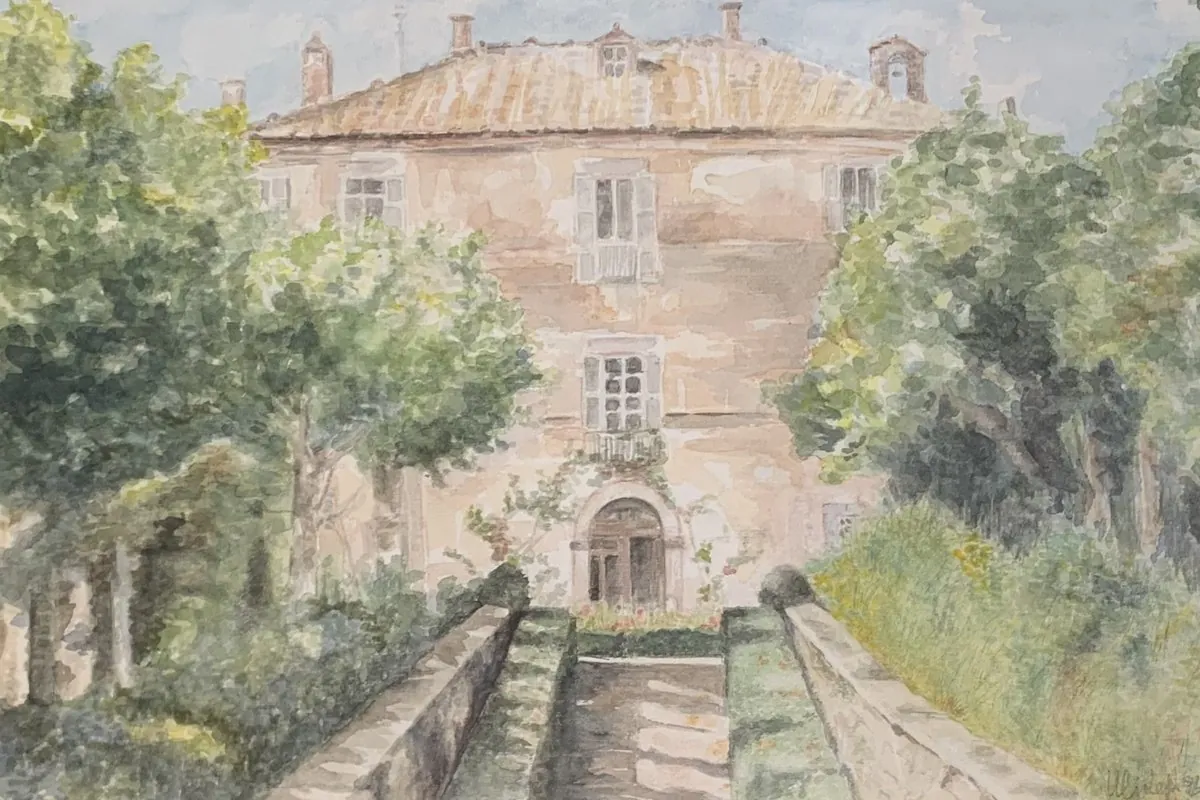
A hunting lodge
The villa was built in the 17th century as a hunting residence, on the estate the documents call Bel Sasso or Bel Poggio: this is why it is still also known as Casino Bussi. In 1737 the architect Giuseppe Prada gave it the appearance it has today.
Merchants and apothecaries
The Bussi are one of the oldest families of Viterbo, recorded as early as the 13th century. Their fortune came from trade: copper and cloth, money changing, apothecary shops. The family’s presence both in Viterbo and in Corneto, today’s Tarquinia, suggests that they controlled the trade between the port and the city, perhaps the spice trade too.
Wealth soon brought prestige: in 1403 the apothecary Luca Bussi was prior of the Commune of Viterbo.
In the service of the powerful
In the 15th century the Bussi entered the affairs of the great lords of the region. Petruccio was the trusted man of Count Everso dell’Anguillara; his brother Domenico, who inherited the apothecary shop, became treasurer of the province of the Patrimonio and lent large sums to Ranuccio Farnese. In 1458 Luciano Bussi obtained customs control over exports from the Papal Patrimonio.
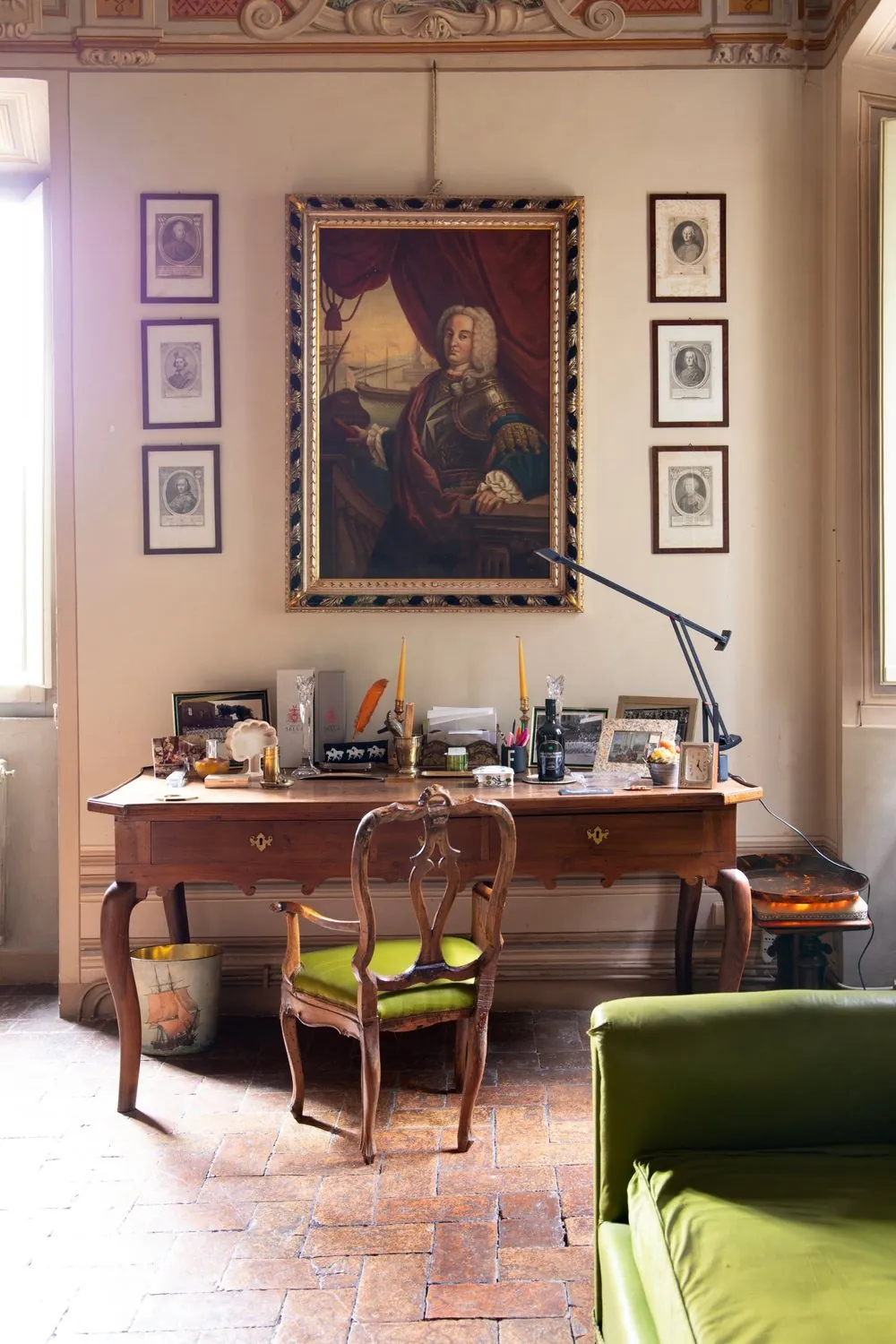
Galleys, pirates and the defence of Candia.
In the following centuries the family gave the Order of Malta two knights. Papirio commanded a papal galley and distinguished himself fighting the pirates who infested the sea between Civitavecchia and Ponza. Anton Domenico was among the defenders of Candia and rose to command the Pope’s navy.
It was the Commander Papirio who commissioned the frescoes of the Gallery of the piano nobile, which celebrate the family’s military deeds. His portrait, in armour with ships in the background, still hangs in the study today.
The cardinal and the chapel
In 1759 Pope Benedict XIV made Pier Francesco Bussi, known as Giovanni Battista, a cardinal. He built the villa’s late Baroque chapel, on the ground floor.
Key dates of the villa and the family
- 13th centuryThe Bussi are already recorded in Viterbo, active in trade.
- 1403The apothecary Luca Bussi is prior of the Commune of Viterbo.
- 1458Luciano Bussi obtains customs control over exports from the Papal Patrimonio.
- 17th centuryThe hunting lodge is built on the Bel Poggio estate.
- 1737The architect Giuseppe Prada gives the villa its present appearance.
- 1759Giovanni Battista Bussi becomes a cardinal and has the chapel built.
This story is best told in person.
A guided visit with the lady of the house, through the rooms, the chapel and the grounds.
Discover private visits